Saturday, March 5, 2011

Food, Glorious Food

Food is always a highlight of visiting new places, and this part of my trip was no exception. We explored food in open-air markets, modern grocery stores, restaurants specializing in Filipino cuisine and other Asian sources, such as a whole neighborhood of Japanese restaurants catering to the Japanese business executives who worked in that area. Here are a few images reflecting my experiences.
"Bonding over food" with new friends
Food just grows on trees in the tropics! These are a few examples from Crissan's neighborhood streets.
Cacao pods

Mature papaya

Young papaya blossom and tiny fruit starts
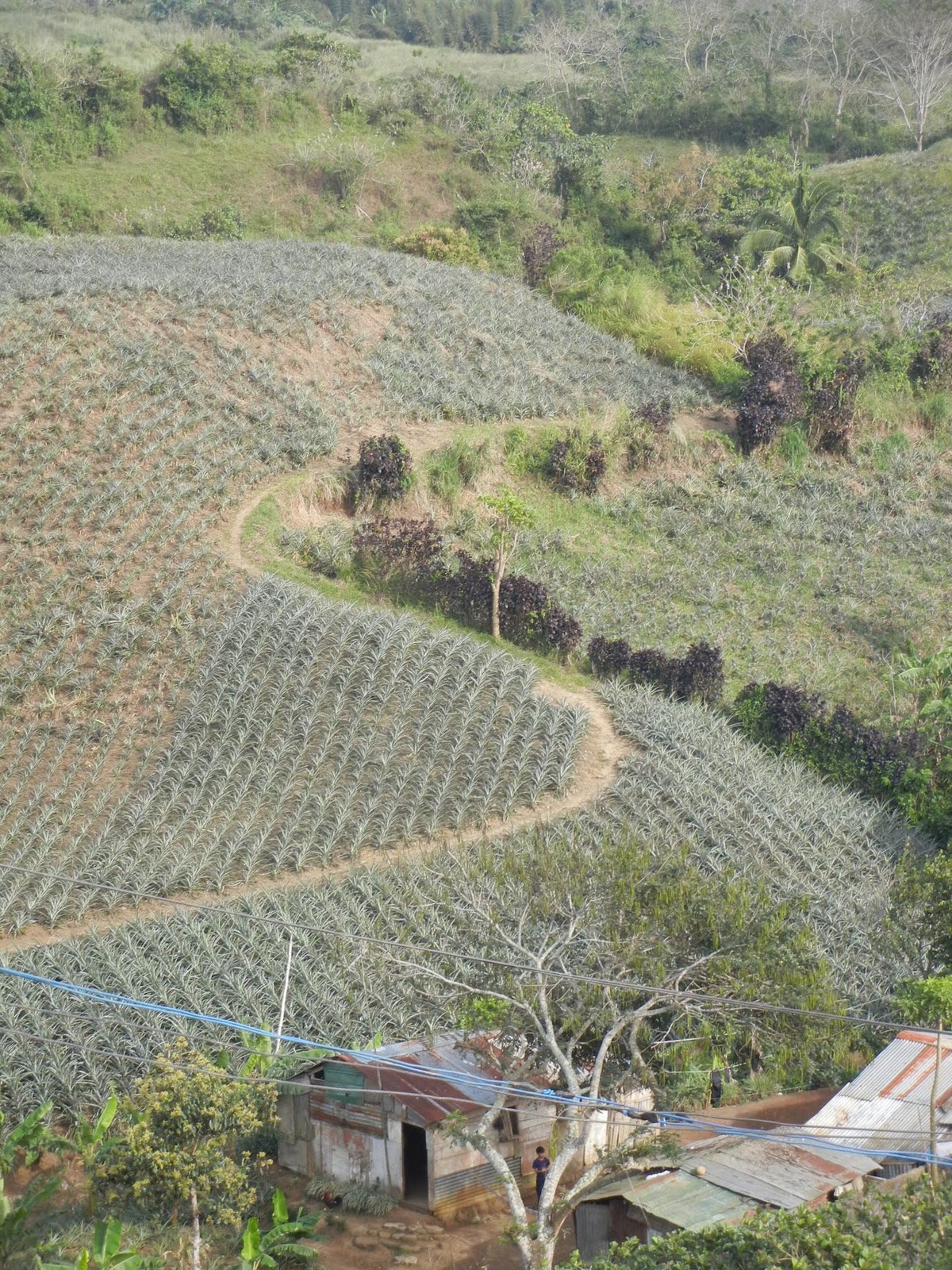
And some fields in higher elevations, where pineapple is cultivated:
pineapples ripening

rows of pineapple plants in the field


In the markets:

Jackfruit on the left, with mangoes and pineapples

The purple fruit hanging on the right is something called "langostines"

 "Langostine" that tastes like a cross between plums, peaches and mandarin oranges. My favorite!


Find the proprietor!
The roots are tamarind (rear), ginger, and turmeric (front).

Quail's eggs

Brined chicken eggs


A delicate translucent dried fish up close; lots of different kinds of dried fish available.

Green-lipped mussels

Dried fish in oil to make them look attractive (!)


And the ever-present rice!

And now the magic of grocery store aisles:

Oh yes - the rice aisle

And the hot dog selection - this whole case!

And the rest of those pigs we saw earlier.


The meat selection contained many interesting examples of imaginative protein sources, such as beef face, frog legs, ox tongue, goat meat, salmon head, rabbit’s carcass, young pigeon, knee cap, pork mask, pork eardrum, and other unnameable things. Here are some chicken feet, which, when fried and sold on the street as a snack, are called "Adidas."
"Adidas"
Here are a few other oddities that caught my eye:
I guess this is jello, or lab supplies.

I've used it for lotion, but as a beverage?

Ice cream, in cheese flavor (Keso), purple sweet potato (Ube), Mango, and Halo-Halo, which means "Mix-Mix" or "your guess is as good as mine!"


A real hold-over from WWII and post-war days - Spam is a delicacy here! Arggh!

Note the "Sun Whitening" lotion. We want tans, they want whitening. What's wrong with us?!? Or, as Dave suggests, perhaps there's an optimal shade of brown that we're all reaching for from the opposite ends of the scale? What's your take?


Friday, March 4, 2011

Carabao - Native Philippine Cattle


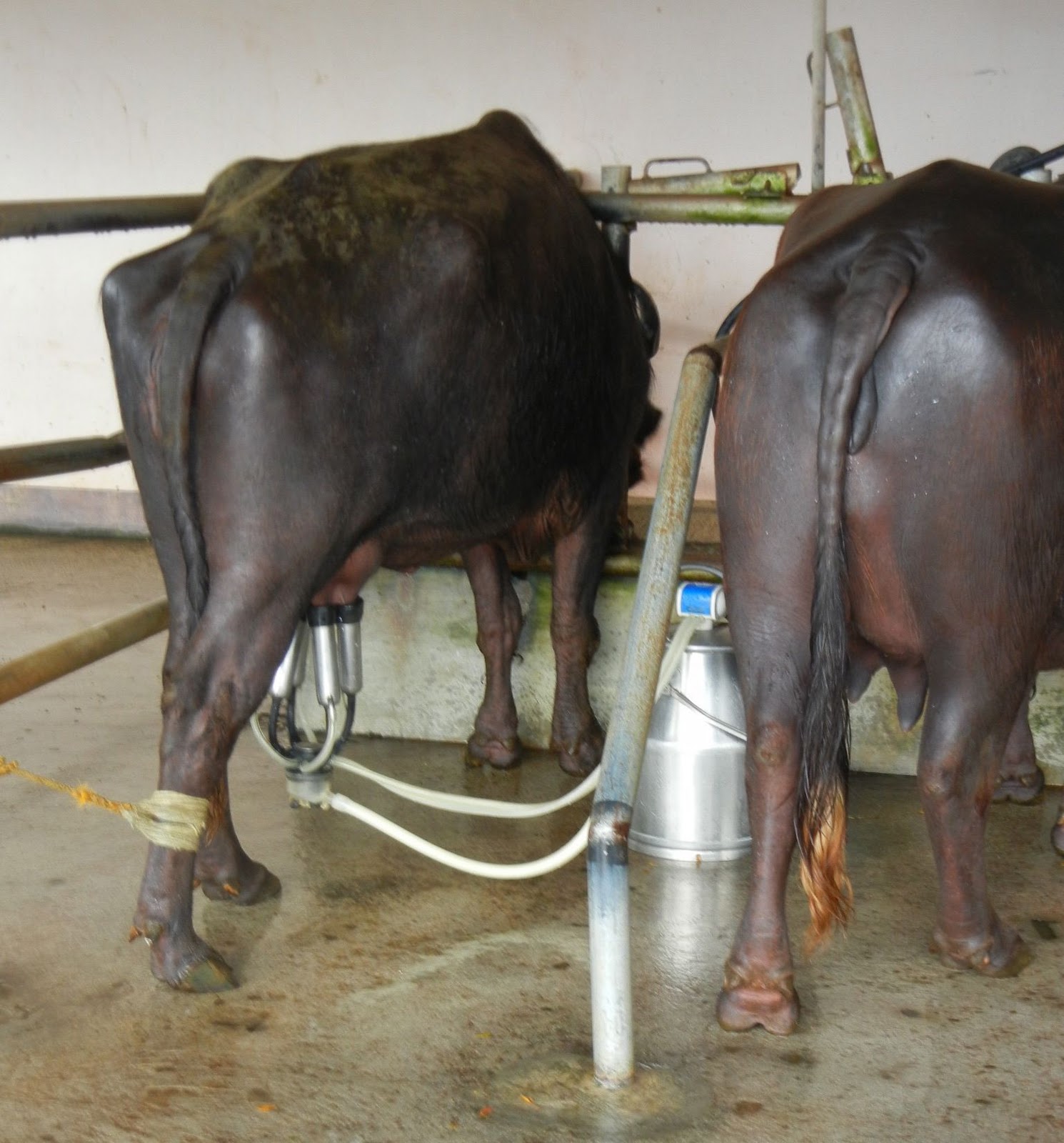
Carabao are a kind of water buffalo common the the Philippines. At the University of the Philippines at Los Banos, there is an agriculture school and a veterinary medicine school. We also stumbled across a carabao breeding program, which is studying ways to cross-breed different kinds of water buffalo in order to increase milk production. The milk produced by this kind of cattle is the richest in fat, at 7% to 9%, contrasting to the dairy cattle we know who produce milk with no more than 4% milkfat. They very kindly gave us a brief tour and explanation of the program, and sent us off to the Carabao Program Dairy Store, where they sell a very popular and flavorful kind of "bufalo mazzarella" as well as yogurt, milk, sweets made of milk, and meats such as bratwurst and hungarian sausage made of buffalo meat.

Precautions against spreading infectious disease

The young are always appealing!

Mom, not so much.
Milking the herd


Religious Symbols and Shrines

 We stopped at a couple of small old Spanish churches in the villages we visited, and we saw a number of small shrines to saints in various shops. A few examples here:
The child is wearing clothing of the kind sold in this shop.

So painful for trying on clothes! Maybe that's why this one was in a lower glassed-in cabinet. (photo thanks to CZ)


This one looks a bit precarious (photo thanks to CZ).
We stopped at a church along the way -

These places have been here for a while.

Poor Saint Sebastian!


Rose and I climbed up the bell tower --

-- and got a lovely view.

The interior was gorgeous too.
In another village, the pictures told an interesting story.


Part of a Heaven-Earth-Hell story, with Adam and Eve up high, Limbo for the unbaptised infants just below, and --

the fearsome future for those destined for the Inferno, shown below, just at eye level for all good churchgoers. Some horriffic imagery here in this painting, I've shown just a small detail of the sinners' fate!
And next, across from the Inferno message, we have a scene of St. Christopher carrying the Christ Child across a river:

The cover-up
But this image, painted on panel, was discovered not to be the original effort. The original painting was painted directly on the wall and concealed beneath this second effort by the same artist, and was only discovered in 1970 when the church was refurbished. It can be presumed that the original showed the saint and the Christ child with features too Asian for the Spanish priest's preference, and was therefore redone with a more western appearance for the two figures, according to our local guide.

The original work, rejected by the padre.
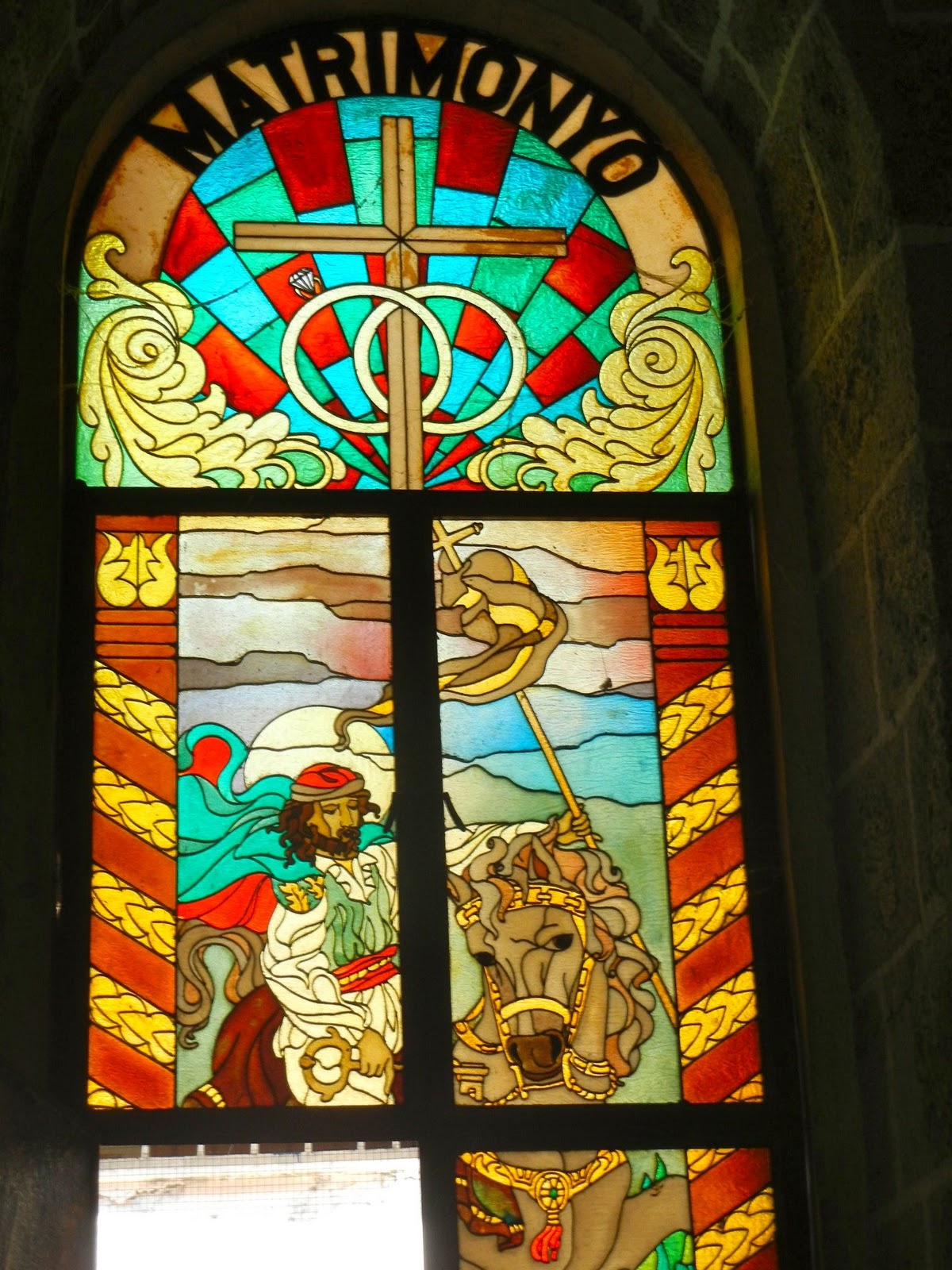
In the same church, but of later addition, were seven beautiful stained glass windows, identifying the seven sacraments of the church in the Tagalog language, showing a change of heart toward the local parishioners, hopefully.


Paete - for Woodcarving and Papier Maché

We spent the better part of an afternoon exploring the town of Paete, known for producing papier maché products, of the sort you might see in a Ben Franklin or Michael's craft store here, those objects covered in smooth brown paper, ready for decoration. Before that came into vogue, it was also known as the wood carving capital of the Philippines. The story told us by a papier maché maker was that the wood for carving became scarcer over recent years, and the local folks realized that they could use the carved wood forms they already had as molds for papier maché, which could then be cut off the wooden forms and reassembled and shipped, hollow and light in weight. The storefronts in the town present a magical world of varied and contrasting imagery.


Lascivious Marilyn among the Virgins and cherubs
Here, a family works and plays in their shopfront, with their wares on display.

It's all fake - paper maché fruits!
In this case, the fruit is real, but the dog - no!
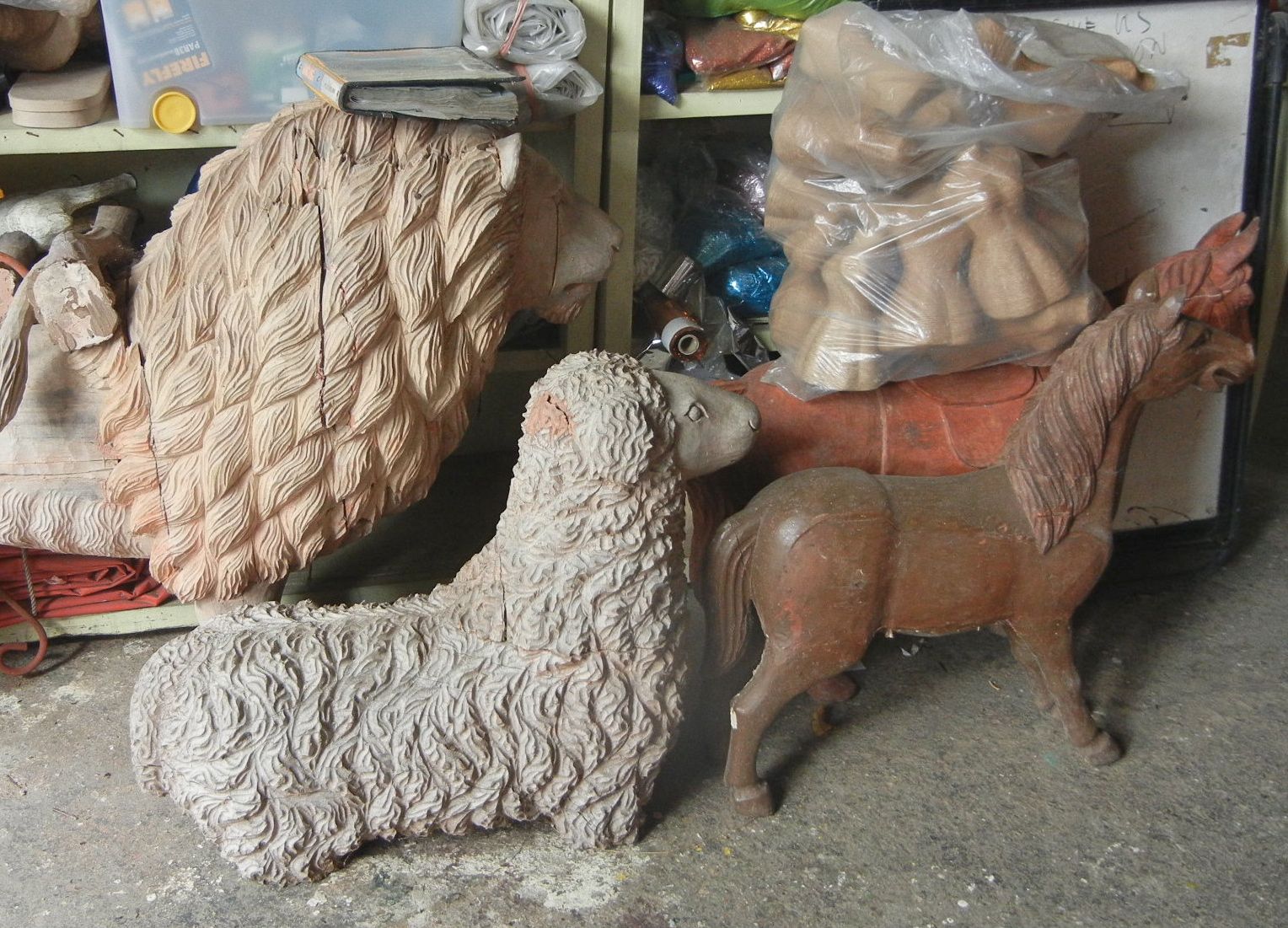
An unused batch of old molds set aside

Some molds are carved of styrofoam now

a few animals, under piles of stuff, not needed now but maybe later.

Not exactly the same Santa as the mold shown here, but you get the idea.


Virgin and Child, Nursing Mother and Child, Bacchus - what strange progression is this?
In one shop, we saw this lovely portrait high on the wall . . .
. . . and met the lovely subject, now in her 90's!
And THAT is the artistry of the village of Paete.

Viet Nam Era Traces

An old "listening post" from Viet Nam war days

We kept an ear to the north from a high point near Manila.


Aside from these traces of the old days of trying to spy on the communist forces in Asia, the area near Los Baños also happens to be where Francis Ford Coppola shot "Apocalypse Now" back in '78 -'79, along the Pagsanjan River. We took a drive there with Crissan's friend Aurora. As the story was told to me, Aurora saw the opportunity for the people from her original Ifugao community to work as extras in the film, because of their much stronger resemblance to Vietnamese people than the population of Filipino people from the more urban areas happened to. She was working in the area where the film was to be shot, and the story has it that she made arrangements for several hundred people to make the 10 hour or longer journey down to the filming site. So if you see the film on TV or Netflix, say hello to Aurora's cousins, aunts, uncles, and townspeople.

Two views of the Pagsanjan River.


Local kids, near Col. Kurz's campsite in the film. They, of course, never heard of "Apocalypse Now."