Friday, March 4, 2011

Paete - for Woodcarving and Papier Maché

We spent the better part of an afternoon exploring the town of Paete, known for producing papier maché products, of the sort you might see in a Ben Franklin or Michael's craft store here, those objects covered in smooth brown paper, ready for decoration. Before that came into vogue, it was also known as the wood carving capital of the Philippines. The story told us by a papier maché maker was that the wood for carving became scarcer over recent years, and the local folks realized that they could use the carved wood forms they already had as molds for papier maché, which could then be cut off the wooden forms and reassembled and shipped, hollow and light in weight. The storefronts in the town present a magical world of varied and contrasting imagery.


Lascivious Marilyn among the Virgins and cherubs
Here, a family works and plays in their shopfront, with their wares on display.

It's all fake - paper maché fruits!
In this case, the fruit is real, but the dog - no!
An unused batch of old molds set aside

Some molds are carved of styrofoam now

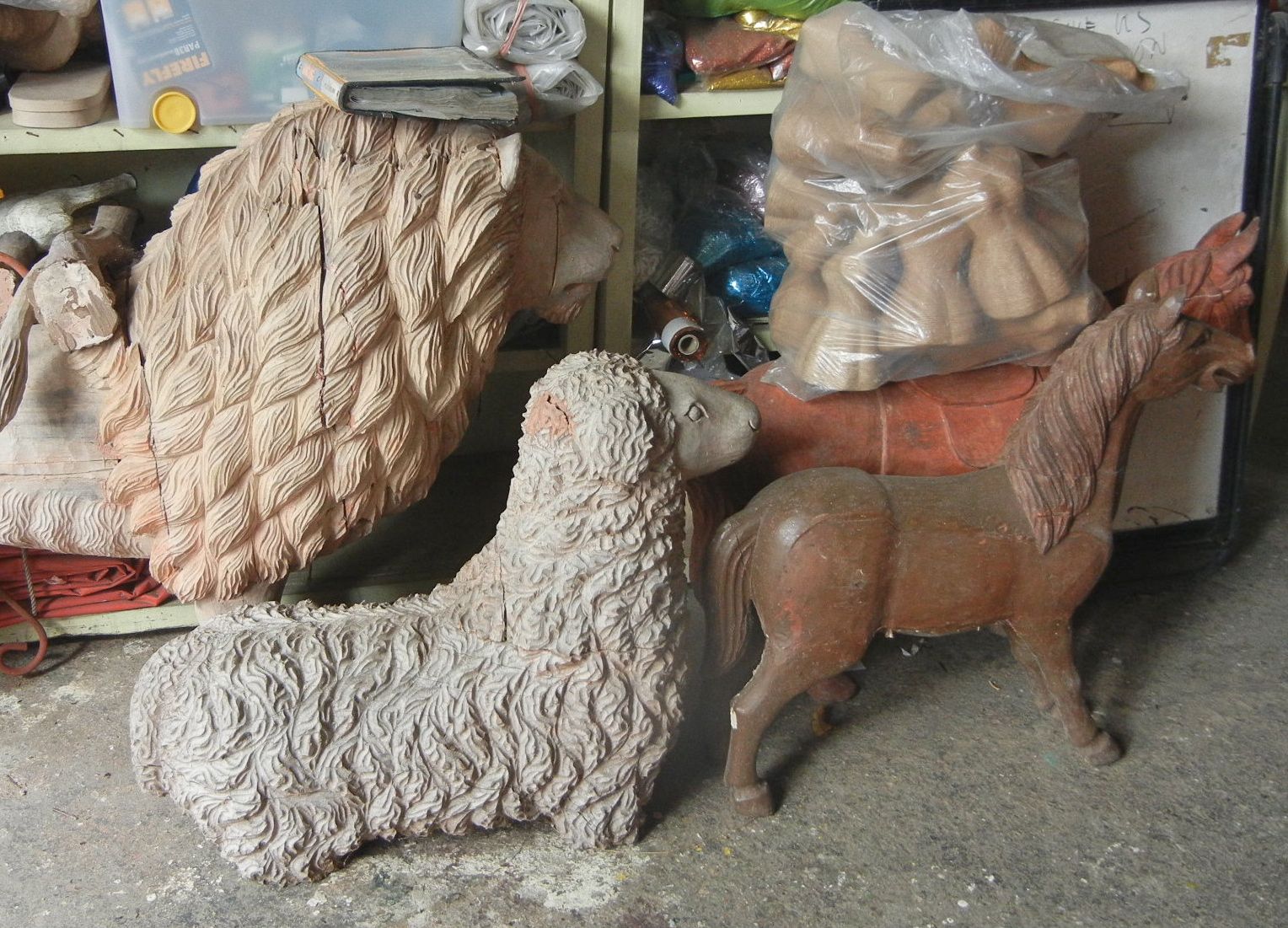
a few animals, under piles of stuff, not needed now but maybe later.

Not exactly the same Santa as the mold shown here, but you get the idea.


Virgin and Child, Nursing Mother and Child, Bacchus - what strange progression is this?
In one shop, we saw this lovely portrait high on the wall . . .
. . . and met the lovely subject, now in her 90's!
And THAT is the artistry of the village of Paete.

Viet Nam Era Traces

An old "listening post" from Viet Nam war days

We kept an ear to the north from a high point near Manila.


Aside from these traces of the old days of trying to spy on the communist forces in Asia, the area near Los Baños also happens to be where Francis Ford Coppola shot "Apocalypse Now" back in '78 -'79, along the Pagsanjan River. We took a drive there with Crissan's friend Aurora. As the story was told to me, Aurora saw the opportunity for the people from her original Ifugao community to work as extras in the film, because of their much stronger resemblance to Vietnamese people than the population of Filipino people from the more urban areas happened to. She was working in the area where the film was to be shot, and the story has it that she made arrangements for several hundred people to make the 10 hour or longer journey down to the filming site. So if you see the film on TV or Netflix, say hello to Aurora's cousins, aunts, uncles, and townspeople.

Two views of the Pagsanjan River.


Local kids, near Col. Kurz's campsite in the film. They, of course, never heard of "Apocalypse Now."

Colorful Streets

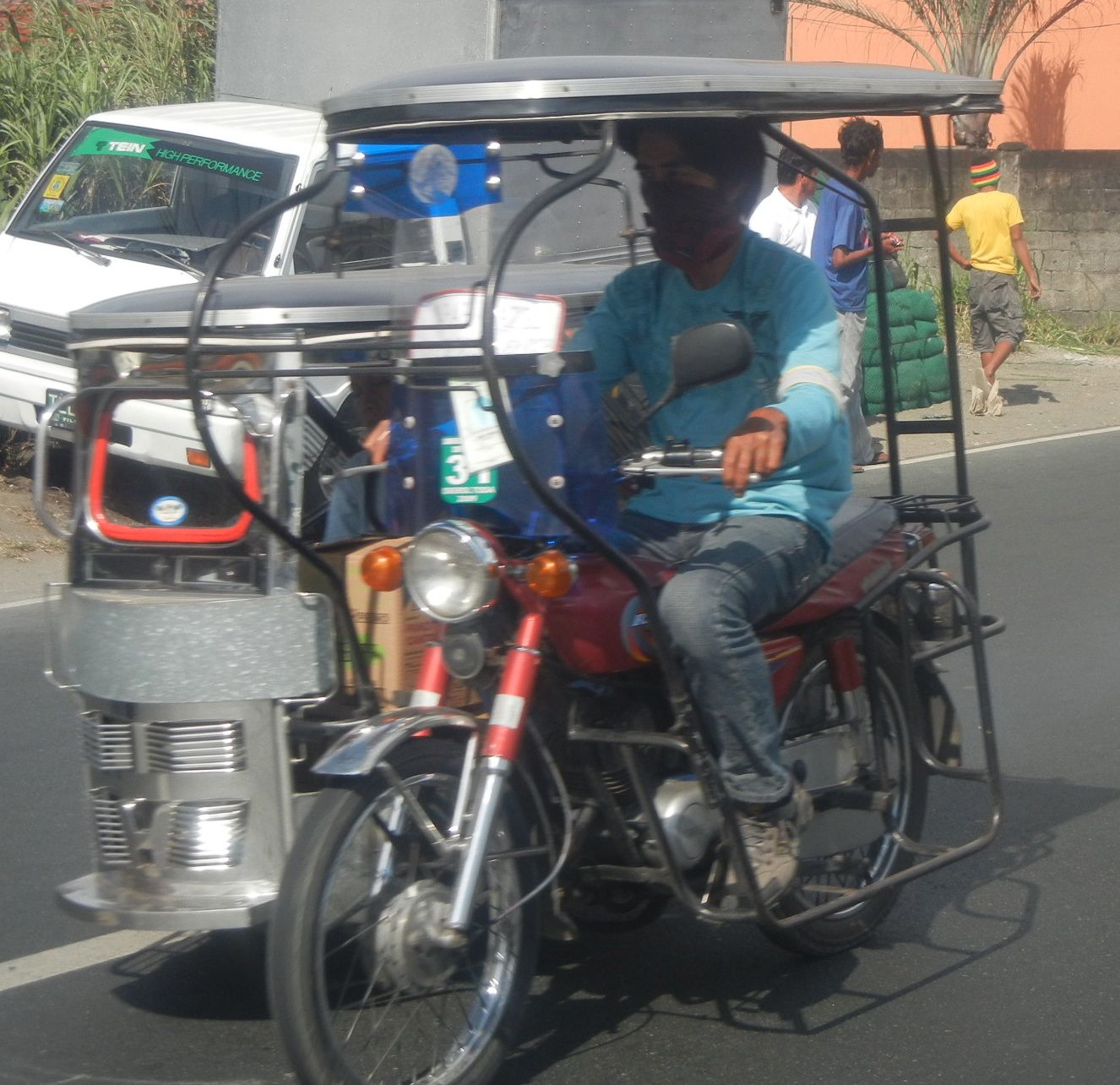
The more we traveled around, the more I marveled at the system of jeepneys and trikes used for transporting people and everything else around the country. Here are a few examples of the emphasis on decoration that seems to pervade the environment.


Look closely at the top to see the cattle horns above the tag "amore."
a familiar logo on the side of a trike cab


Decorations adorning another trike cab
Kids, playing on their own version of a tricycle cab.

The houses also show this attention to ornamental detail, even with a limited budget and limited access to ornamental materials.

Fancy garage front design made of wood slats

A traditional style of house, with capiz-pane windows (small translucent sheets plied from seashell) in the upper story windows.
Fancy upper balconies
Lovely vines and potted plants adorn this place.
Advertising is another highly visible element of the Philippine landscape, from the signs for local home-front convenience stores called sari-sari stores along residential streets in city and small town alike, to the massive billboards lining the highways and mounted on the taller buildings in downtown Manila. I noticed many familiar logos, and some surprising and unique local business names and signs as well.

Along the highway approaching Manila

Some of you may have seen these in California.

"Pasalubong" suggests taking something along to share
a modern McDonald's, where you can get a "McDo"
The famous McDo - Fried chicken and spaghetti! Hmmmm...
Apparently, McD's has been in Manila for some time now!
A Chinese fast food restuarant's version of Halo-Halo, a sweet ice creamy dessert mixing all sorts of unlikely sweet things together.

And now for some true originals:
Dogpound Burgers! How likely would YOU be to eat there?

If not the Dogpound, maybe at "d'famous, d'original" Aling Glo's!

Gal Fun

An evening for special hats - I had gotten mine just in time!
We weren't back at Los Baños long (where Crissan lives and the International Rice Research Institute is located), before I was introduced to several of the women living there, most married to scientists working at IRRI. I was welcomed and entertained with many stories of unusual lives. The women I met came from the Ifugao region north of Manila, the countries of Great Britain, Colombia, Germany (both formerly East Germany and West Germany), and Australia. I later met others from China and I had already met some from India. Quite a microcosm within this small community.

One of the first places Crissan took me to was the American Women's Club Bazaar, a monthly fundraiser for charity efforts, like a huge craft show, featuring artists and artisans from all over the Philippines showing their handcrafted jewelry, clothing, housewares, foods, and furniture. I seem to have taken no pictures that day, as I was so busy just taking in all the exquisite work I saw. I did indulge in the hat you see in the photo above, created by a group known as "Hat Momma," whose logo is "topless can be so uncool!"

We also went to the market where they specialized in pearls, which all apparently now come from China. There was booth after booth of freshwater cultured pearls, South China Sea natural pearls, and beads made from everything from gem-quality stones to plastic, and everything in between.
"Pinky's" pearl booth - jillions of pearls!

The next day, a few of us set off to explore some nearby villages known for their artisanry with embroidering the very lightweight, transparent fabrics made of pineapple and banana fiber, used especially for men's formal wear in this very hot climate, where 3-piece suits would never do. The fabric is woven in long rectangles which are embroidered and then washed, strung taut onto wooden frames and then put out in the sun to dry. They are then cut and sewn into the shirts, with plackets for buttoning only partway down the front, between the embroidered pattern.
Embroidered fabric drying on the frame.

Close-up of embroidery as it will be on shirt front.


a finished shirt
A seamstress works on a two-tone pattern
Crissan (far right) consults with two ladies from the shop, and friend Aurora, front, about a design for a jacket.
On another day, after spending some time in Manila, we went to a salon at one of the big downtown hotels for some pampering, which turned out to be very inexpensive and which felt VERY good. They even give you a neck and shoulder massage as part of the deal -no extra charge! SOoooo relaxing!
All at once - hair, hands, feet. Luxury!


Ahhhhhhhh....


Later on, I visited Aurora when she was weaving on the traditional Ifugao backstrap loom. She grew up in a tribal culture but came to the city to find work in her late teens, as do many people from the distant villages. She has had an incredible range of experiences in the years since then (more about that later.) She offered me a chance to try my hand at the weaving, which I was delighted to do; thankfully she was a patient tutor, as I found it very awkward to manage what years of practice had taught her to do with a confident rhythm and attention to detail. It was a privilege to add a few rows to the fabric she was making.
Here's Aurora, dextrous and quick . . .


. . . and me, a bit awkward but having great fun.

Wednesday, March 2, 2011

Back to the Philippines


Almost as soon as we began to drive away from the airport after arriving in Manila, I was amazed to see how much the country had changed during the short time I was in India! When I first arrived in Manila from the US, traffic here was chaotic, with a confusing rush of strange vehicles such as jeepneys, motorbikes with sidecars for passengers or cargo, huge tourist buses and all kinds of cars and trucks, with pedestrians weaving in and out of traffic to cross streets at random points. Horns were honked to warn vehicles not to collide with others as they strayed across lanes, also in seemingly random fashion.

But this was before I witnessed the TRUE chaos of traffic in India, where honking horns is a form of personal expression that is exercised early and often, and sustained over one’s entire trip. Jeepneys are less common, but carts pulled by bullocks are much more likely to pull out from side streets onto highways, while the random cow meanders across the road to find another patch of grass in the median. Tuk-tuks, the motorized rickshaws, scoot quickly between larger vehicles, trucks sit apparently parked in traffic lanes for extended periods of time, and everything takes place in the “wrong” direction, on the “wrong” side of the road, so you never know where to expect the next car to come from.

I also noticed that Manila had become cleaner while I was away! The occasional pile of debris I now saw was obviously the result of construction underway, and I witnessed workers using dustpans with long handles to sweep debris into along the street curbs and sidewalks. When in India, I also saw people sweeping up the walks or streets in front of their shops or their homes along dusty roads, but the dust is somehow always there. India is a dry and dusty place, and the dust seems to have become an accepted and unremarkable aspect of the everyday environment.

So this time, Manila seemed calmer, brighter, cleaner and more orderly than I had noticed in the first part of my stay there. Everything is relative!

And now, my time in the Philippines has come to a close as well. I write this as I sit in the Manila airport waiting to board my flight home. I am only just beginning to collect my further impressions of the Philippines. I spent 10 days here after returning from India, and they went by in a whirlwind.

Having a nice lunch with Leilani's dad
Crissan took me to many of her favorite places, into the city of Manila and into some of the smaller villages in the area. I was introduced to many of the Zeigler’s friends and neighbors at IRRI, and I met the family of one of my co-workers who grew up here. I watched artisans creating decorative and functional items unique to their specific locale.             

I tried my hand briefly at weaving on a backstrap loom in the traditional manner of the Ifugao people. We went to bead stores, and looked at thousands of pearls of every imaginable shape, color and luster, some dyed and others of natural smoky colors, and beads of glass, stone, crystal and shell. I saw more orchids, tasted more tropical fruits, visited grocery stores and open air markets.

veggies


I visited a carabao breeding program at the agricultural university in Los Banos, and tasted “buffalo” yogurt made from their very rich milk.


I saw the lake in a volcano’s crater that makes Crater Lake in Oregon look like a pond. I tasted Filipino cuisine, much milder than the spicy foods of India but also very succulent and delicious. We went down to the banks of the river where the film “Apocalypse Now” was filmed (no, not in Viet Nam), now a popular spot for canoeing the rapids.

I took in the landscape of huge billboards and glitzy advertising along the highways approaching Manila and visited some of the fancier shopping centers and malls in the city. We passed by dozens and hundreds of “sari-sari” stores, little storefront mom-and-pop businesses run from small cubbies and doorways along residential streets, selling snacks and conveniences.  It seems everyone in the Philippines is an entrepreneur of one sort or another.


We went for an afternoon of pampering at the salon in the Peninsula Hotel, where massage comes gratis with a haircut or manicure. We visited an old church built by the Spanish colonizers, and saw vivid evidence of some of the meaner aspects of colonialism in the artwork on its walls, and in the same church, saw stained glass windows spelling the sacraments of the church in the Tagalog language. I saw shrines and religious symbols pervasively present, in stores as well as churches.

I learned about and witnessed the strange phenomenon of Asia’s “third gender,” a widespread acceptance of men who present themselves as women, not in flashy “drag” as we might see in the US but as ordinary women, wearing ordinary, understated clothing and jewelry, presenting simply as the female person they feel they are. In the bead markets run mainly by Muslims, many wore the headscarf common to Muslim women, and no make-up. It’s just a fact of life in Asia, so I’m told.
Is she, or isn't he?

So, I’ve run on for quite a while here, and now I think it’s time to let my photos do the talking. I’ve sorted through and tried to pull together the best few, enough to give you a feel for the places I saw and the people I met! Stay tuned, because I have lots of sorting to do. While I recover from jet lag over the next couple of days, I'll make the last additions to finish up my travel journal. I'm looking forward to being back at home, after a lovely, wonderful, exciting and magical adventure, that makes me sure of one thing - I want to see more of Asia!


Sunday, February 27, 2011

More Rice Info Sources

 Now that my "intensive rice immersion course" is nearly at an end, as my visit to my friends who work and live at IRRI in the Philippines draws to a close, I thought I would offer the following references, just in case any of you are curious to learn more.

IRRI – International Rice Research Institute

IRRI, or the International Rice Research Institute, is a nonprofit independent research and training organization. 

IRRI develops new rice varieties and rice crop management techniques that help rice farmers improve the yield and quality of their rice in an environmentally sustainable way. We work with our public and private sector partners in national agricultural research and extension systems in major rice-growing countries to do research, training, and knowledge transfer. Our social and economic research also informs governments to help them formulate policy to improve the equitable supply of rice.


Our mission

To reduce poverty and hunger, improve the health of rice farmers and consumers, and ensure environmental sustainability through collaborative research, partnerships, and the strengthening of national agricultural research and extension systems. 

Our goals

·       Reduce poverty through improved and diversified rice-based systems.
·       Ensure that rice production is sustainable and stable, has minimal negative environmental impact, and can cope with climate change.
·       Improve the nutrition and health of poor rice consumers and rice farmers.
·       Provide equitable access to information and knowledge on rice and help develop the next generation of rice scientists.
·       Provide rice scientists and producers with the genetic information and material they need to develop improved technologies and enhance rice production .

IRRI's goals contribute to the United Nations Millennium Development Goals to eradicate extreme poverty and hunger and ensure environmental sustainability.


Rice and food security

One fifth of the world’s population—more than a billion people—depend on rice cultivation for their livelihoods. Asia, where about 90% of rice is grown, has more than 200 million rice farms, most of which are smaller than 1 hectare. Rice-based farming is the main economic activity for hundreds of millions of rural poor in this region. In Africa, rice is the fastest growing staple. This increase in the demand for rice is also true for Latin America and Caribbean countries.
In most of the developing world, rice is equated with food security and closely connected to political security. Changes in rice availability, and hence price, have caused social unrest in several countries.
To keep rice prices stable and affordable at around $US300 million a ton, IRRI estimates that an additional 8-10 million tons of rice needs to be produced every year.
The challenge, above anything else, is to produce this additional rice with less land, less water, and less labor, in more efficient, environmentally-friendly production systems that are more resilient to climate change, among other factors.


“Never an Empty Bowl”

IRRI and the Asia Society have launched a new food security report for Asia in Mumbai, calling for increased investment in rice research.

India is an "indispensable partner" in rice research - to help address poverty and food security.
The report, Never an empty bowl: sustaining food security in Asia, emphasizes the importance of rice as the primary staple food in Asia and a major source of income for Asian farmers. Existing global efforts to combat hunger and achieve food security are evaluated in the report, which also recommends more research on: climate change mitigation for farming, farming infrastructure, and market price stability.

“India, which is the second biggest producer of rice and where rice is a staple for more than 65% of the population, is an indispensable partner in spearheading rice research,” said IRRI Deputy Director General for Research, Dr. Achim Dobermann, who helped launched the report.


CSISA – Cereal Systems Initiative South Asia

“This project seeks to decrease hunger and malnutrition and to increase food and income security of resource-poor farm families in South Asia through the accelerated development and inclusive deployment of new varieties, sustainable management technologies, and policies.”


STRASA- Stress-Tolerant Rice for Africa and Asia
The Project:
The poorest rice producers produce their crop under rainfed conditions, in which drought, submergence, and poor soils, i.e., salinity, reduce yields and harm their livelihoods. Recent advances in genetics and breeding have made the development of tolerant rice varieties feasible and their cultivation can substantially contribute to poverty alleviation in rainfed environments. For these areas, the project seeks to achieve, within the next ten years, a 50% increase in yield in farmers’ fields, using improved cultivars and enhanced management practices. In the short term the project will disseminate improved, stress-tolerant rice varieties to at least 400,000 households in South Asia and sub-Saharan Africa; in the longer term it expects varieties tolerant of drought, submergence, and/or salinity to benefit at least 18 million households. In addition, the project aims to build capacity of researchers and seed producers; and promote the exchange of elite germplasm. The project will identify the regions where stress-tolerant varieties will have maximum impact and develop a network for seed production and adoption.


Another site visited by the team:

TNAU – Tamil Nadu Agricultural University


This Story appeared in the Hindu newspaper the day after Dr. Zeigler’s speech at Annamalai University in Chidambaram, Tamil Nadu.


Tamil Nadu - Cuddalore
Date:17/02/2011

India has vital role to play in global rice agenda: IRRI chief

Special Correspondent
CUDDALORE: In the global rice agenda, India has a vital role to play because of its rich rice ecologies and vast pool of scientific manpower, according to Robert S.Zeigler, Director General of International Rice Research Institute (IRRI), the Philippines.
He was delivering a special lecture organised under the aegis of the agronomy department of Annamalai University at Chidambaram near here on Wednesday.
Mr. Zeigler said that India's food security had a bearing on the international food security because it happened to be a major rice producer in Asia. However, the country was facing many challenges to retain the rice production at the present level.
The primary problems were that land, labour and water were moving away from rice, that is, these three aspects were becoming scarce. Most of the rice-growing areas were located in the delta region and therefore were at sea level. Any rise in sea level would drastically affect the rice-growing areas. Flood was another factor that gravely cut into production and according to statistics 10 million hectares of rice lands in Asia were lost every year to the floods.
The climate change too had its negative impact on rice yield and it was estimated that every one degree Celsius rise in temperature would reduces 10 per cent of yield.
Mr. Zeigler said that the IRRI was developing submergence-resistant rice varieties that could survive even 17 days of flooding. For instance, the Swarna (Sub 1) tried in Uttar Pradesh had started yielding good results and the seeds would be distributed to about one million farmers over a period.
The rice production in 1991 was put at 350 million tonnes and considering the requirements for 2035 it must go up to 550 million tonnes. The supply-demand gap could be bridged only through judicious planning, involving the policy makers and all the stakeholders such as the farmers, farm scientists and the public and private sectors, he said.
Mr. Zeigler opined that the farm policy should be based on ground reality and should not be driven by commercial interests and not be at the behest of the pesticide and fertilizer manufacturers.
‘Golden rice'
The Director General revealed that the IRRI was evolving the ‘Golden rice' — GR1 and GR2 varieties that would have carotenoid level of 8 ug/g and 20 ug/g respectively — rich in Vitamin A.
It was expected to be released in two-three years time, he said.
The IRRI was also working on rice varieties that would address the diabetics' problem but categorically said that it was not into production of Bt rice. He called for redoubling the efforts to create more number of rice scientists to overcome the challenges.
He hinted that the IRRI and Annamalai University could have joint Ph.D and post-doctoral programmes in the next five to six years. On the occasion, Mr. Zeigler released a compact disc, a brief documentary on “farming livelihoods,” promoting the integrated farming system.
Vice-Chancellor of Annamalai University M.Ramanathan said that the visit of Mr. Zeigler would inspire and motivate the students and scholars and raise the glory of the university to a new level. U.S.Singh, IRRI, New Delhi, Rm.Kathiresan, Head of Department of Agronomy, and Crissan Zeigler participated.
© Copyright 2000 - 2009 The Hindu